
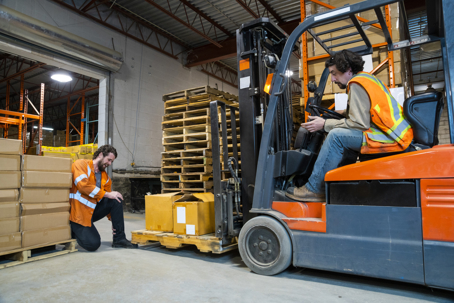
Forklifts play a critical role in warehouses, packing houses, and manufacturing facilities, especially in areas where agriculture and industrial activity are central to the local economy. In Southeast Georgia, seasonal surges, such as the busy Vidalia onion harvesting period, can significantly increase warehouse activity. During these peak times, more workers, tighter deadlines, and heavier workloads can create conditions where safety risks multiply.
In high-traffic warehouse environments and manufacturing hubs, the combination of heavy machinery and pedestrian workers creates a setting where forklift accidents can happen quickly and without warning. Understanding the most common causes of these incidents can help workers recognize risks and better protect themselves on the job.
Why Forklift Accidents Increase During Seasonal & High-Volume Operations
Certain times of the year place greater demands on warehouses and packing facilities. During peak agricultural seasons, packing houses may operate extended hours, bring in temporary workers, and increase production speed. These changes can unintentionally create hazards when safety practices are rushed or overlooked.
Several factors contribute to higher accident rates during busy periods:
- Increased worker traffic creates more opportunities for collisions. Seasonal hiring often brings in employees unfamiliar with warehouse layouts or forklift movement patterns, increasing the risk of pedestrian-forklift accidents.
- Faster production timelines reduce safety margins. When facilities are focused on meeting shipping quotas or handling large volumes of goods, operators may feel pressure to move loads quickly rather than cautiously.
- Congested loading areas limit visibility. Busy packing houses and distribution centers often have narrow aisles, stacked materials, and multiple forklifts operating at once, making it harder for operators to see nearby workers.
- Fatigue from long shifts raises the risk of mistakes. Extended work hours during peak seasons can impair reaction times and judgment for both forklift operators and pedestrians.
These seasonal pressures can turn routine operations into high-risk environments if safety protocols are not strictly followed.
Pedestrian-Forklift Collisions Are Among the Most Dangerous Risks
One of the most serious hazards in warehouse environments involves collisions between forklifts and workers on foot. These incidents are particularly dangerous because forklifts are heavy, difficult to stop quickly, and often have limited visibility.
Pedestrian-related forklift accidents commonly occur when:
- Workers enter forklift operating zones without clear warning systems. Lack of designated walkways or signage can leave pedestrians exposed to moving equipment.
- Operators experience blind spots while reversing or turning. Forklifts often block the driver’s view, especially when carrying large or elevated loads.
- Warning signals are ignored or malfunctioning. Audible alarms, horns, and visual signals are critical safety tools, but accidents can happen when these systems are not used properly.
- Multiple forklifts operate in tight quarters. Crowded warehouse floors increase confusion and make it harder to anticipate movement patterns.
These types of incidents frequently result in severe injuries due to the sheer weight and force of forklift equipment.
Forklift Safety Violations Remain a Leading Cause of Workplace Injuries
Forklift accidents are often preventable when proper safety procedures are followed. Unfortunately, safety violations still occur in many industrial settings, often due to inadequate training or poor supervision.
Some of the most common safety violations include:
- Operating forklifts without proper certification or training. Employers are responsible for ensuring that operators are trained and qualified before using heavy machinery.
- Exceeding load limits or improperly balancing materials. Overloaded forklifts are more likely to tip or drop cargo, creating serious hazards for nearby workers.
- Failing to perform routine inspections and maintenance. Mechanical failures can occur when equipment is not regularly checked or repaired.
- Ignoring established safety procedures. Shortcuts, such as driving too fast or bypassing safety checks, significantly increase the likelihood of accidents.
Safety violations not only endanger workers but can also expose employers and third parties to liability when injuries occur.
Equipment Failures & Maintenance Issues Can Trigger Serious Accidents
While operator error is a major factor in forklift accidents, mechanical failures can also play a significant role. Equipment that is poorly maintained or defective can fail at critical moments, leading to sudden and dangerous situations.
Mechanical-related forklift accidents may involve:
- Brake or steering failures that prevent safe stopping. Loss of control can lead to collisions with workers, walls, or storage racks.
- Hydraulic malfunctions that cause loads to fall unexpectedly. Falling cargo can strike workers below, resulting in head injuries or crush injuries.
- Worn tires or damaged components that affect stability. Reduced traction increases the risk of rollovers or sliding incidents.
- Defective design or manufacturing flaws. In some cases, the forklift itself may have inherent safety issues that contribute to accidents.
When mechanical failures cause an injury, additional parties, such as manufacturers or maintenance providers, may be held responsible.
Unsafe Warehouse Layouts & Traffic Patterns Increase Risk
Warehouse design plays a significant role in safety. Poorly organized layouts can create confusion, limit visibility, and increase the chances of collisions between forklifts and workers.
Unsafe layouts often involve:
- Narrow aisles that restrict safe maneuvering. Tight spaces make it difficult for operators to navigate without striking nearby objects or workers.
- Lack of clearly marked pedestrian walkways. Workers need designated safe paths to move through the facility without crossing forklift routes.
- Insufficient lighting in work areas. Poor visibility increases the risk of missed hazards and delayed reactions.
- Obstructed sightlines caused by stacked inventory. Tall or improperly stored materials can block views and create blind corners.
Facilities that fail to maintain safe layouts place workers at unnecessary risk and may be liable for preventable accidents.
Protecting Your Rights After a Forklift Accident
Forklift accidents in warehouses and packing houses often involve complex legal questions, especially when multiple safety violations or equipment issues are involved. Injured workers may be entitled to workers’ compensation benefits and, in some cases, may also have the right to pursue claims against third parties responsible for unsafe conditions or defective equipment.
At Craig Injury Law, we represent injured workers and accident victims across Southeast Georgia, including those hurt in warehouse environments, packing facilities, and industrial settings during high-volume seasons such as the Vidalia onion harvest. Our team understands the challenges involved in heavy machinery accidents and works to identify all responsible parties so clients can pursue the full compensation available under Georgia law.
If you or a loved one has been injured in a warehouse or forklift accident, call (912) 304-5202 or contact us online to discuss your situation with an experienced industrial injury lawyer. We are here to help you move forward with confidence.