
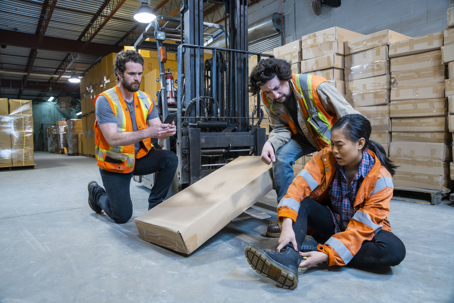
Forklifts are essential to modern industry, but they also present serious safety risks. In busy warehouses, manufacturing plants, and shipping operations throughout Southeast Georgia—especially in areas with heavy shipping and logistics activity—forklift accidents happen more often than many people realize. When these incidents occur, injured workers are often left facing painful injuries, unexpected medical expenses, and uncertainty about what type of claim they can file.
Understanding the difference between workers’ compensation and personal injury claims is critical after a forklift accident. In some cases, injured workers may even have the right to pursue both, depending on how the accident occurred and who was responsible.
Why Forklift Accidents Are So Dangerous
Forklifts may appear manageable at low speeds, but they are powerful machines capable of causing severe and life-altering injuries. Their size, weight, and limited maneuverability create risks that are not always obvious until something goes wrong.
Forklift accidents frequently result in:
- Crush injuries & fractures. Forklifts can pin workers against walls, racks, or other equipment, often leading to broken bones, internal injuries, and long-term disability.
- Head and traumatic brain injuries. Falling loads or sudden impacts can cause workers to strike their heads, leading to concussions or more serious brain injuries.
- Spinal cord and back injuries. Sudden jolts, rollovers, or heavy impacts can damage the spine, sometimes resulting in chronic pain or permanent mobility limitations.
- Amputations and severe lacerations. Moving parts and heavy loads create a risk of devastating injuries to hands, arms, and legs.
These injuries often require extensive medical treatment, rehabilitation, and time away from work, making it essential to understand what legal options are available after an accident.
Understanding Workers’ Compensation Benefits in Georgia
Most employees injured while operating or working near forklifts are covered under Georgia’s workers’ compensation system. Workers’ compensation is designed to provide financial support without requiring proof that an employer was negligent.
Workers’ compensation benefits may include:
- Medical treatment coverage. Workers’ compensation typically pays for necessary medical care related to the injury, including hospital visits, surgery, medications, and rehabilitation services.
- Wage replacement benefits. If an injury prevents you from working, you may receive partial wage benefits while you recover.
- Temporary or permanent disability benefits. Depending on the severity of your injury, you may qualify for compensation for lasting impairments or reduced ability to work.
- Vocational rehabilitation services. Some injured workers may receive assistance with retraining or job placement if they cannot return to their previous role.
While workers’ compensation provides essential support, it also has limitations. For example, it generally does not compensate injured workers for pain and suffering, and benefits may not fully cover long-term financial losses.
When a Personal Injury Claim May Also Apply
Not every forklift accident is limited to workers’ compensation. In some cases, a third party—someone other than your employer or co-worker—may be responsible for the accident. When this happens, injured workers may have the right to file a personal injury claim in addition to receiving workers’ compensation benefits.
Third-party liability may arise when:
- A forklift manufacturer produces defective equipment. Mechanical failures, faulty brakes, or design flaws can cause serious accidents, potentially making the manufacturer liable.
- Maintenance companies fail to properly service equipment. If a third-party contractor neglects repairs or inspections, they may share responsibility for resulting injuries.
- Contractors or vendors create unsafe conditions. Outside workers operating forklifts or placing loads improperly may contribute to accidents.
- Property owners fail to maintain safe premises. Poor lighting, unsafe flooring, or hazardous layouts can increase the risk of forklift collisions and injuries.
These situations are serious because personal injury claims can provide compensation beyond what workers’ compensation offers, including damages for pain and suffering and other non-economic losses.
The Role of Third-Party Liability in Industrial Settings
In high-traffic industrial environments, responsibility for safety is often shared among multiple companies and contractors. This creates opportunities for third-party liability in forklift accidents.
In large logistics and shipping environments—such as those supporting port operations—workers frequently interact with equipment owned, maintained, or operated by outside companies. When accidents happen in these environments, determining liability may involve reviewing contracts, maintenance records, safety logs, and witness statements.
Third-party liability investigations often focus on:
- Whether the equipment was properly inspected and maintained
- Whether safety procedures were followed by outside contractors
- Whether defective parts or design issues contributed to the accident
- Whether site conditions created unreasonable risks
Identifying all responsible parties is essential to maximizing available compensation after a serious forklift injury.
Key Differences Between Workers’ Comp & Personal Injury Claims
Although both workers’ compensation and personal injury claims provide financial recovery after an accident, they function in very different ways. Understanding those differences can help injured workers make informed decisions about their legal options.
Some of the most important distinctions include:
- Workers’ compensation does not require proof of negligence, while personal injury claims require evidence that another party caused the accident.
- Workers’ compensation typically limits benefits to medical expenses and partial wage replacement, whereas personal injury claims may include compensation for pain and suffering and full financial losses.
- Workers’ compensation claims are usually filed through an employer’s insurance system, while personal injury claims are pursued through civil legal action against a responsible third party.
- Workers may be eligible to pursue both types of claims simultaneously when a third party contributed to the accident.
Understanding how these claims interact is critical to avoiding missed compensation opportunities.
Steps to Take After a Forklift Injury
What you do immediately after a forklift accident can significantly impact your ability to recover compensation. Even if injuries seem minor at first, documentation and timely action are essential.
After a forklift accident, injured workers should consider:
- Reporting the injury to a supervisor as soon as possible
- Seeking medical attention right away and following all treatment recommendations
- Documenting the scene with photos, if it is safe to do so
- Collecting contact information from witnesses
- Preserving any evidence related to equipment or safety conditions
Taking these steps can help protect your rights and create a stronger foundation for any claim that follows.
Get Help Understanding Your Legal Options After a Forklift Injury
Forklift accidents can leave injured workers dealing with complex legal questions about workers’ compensation, third-party liability, and personal injury claims. At Craig Injury Law, we represent injured workers and accident victims across Southeast Georgia, including those hurt in industrial, warehouse, and shipping-related incidents.
Our team understands how to investigate forklift accidents, identify responsible parties, and pursue the full range of compensation available under Georgia law.
If you or a loved one has been injured in a forklift accident, call (912) 304-5202 or contact us online to discuss your case and learn how we can help you move forward.